Measure Screw
Language: English

SCREW SIZE FINDER

Measure Screw Size Online Tool

Find a likely screw size and screw type in your browser.
Compare diameter estimates, check thread pitch and explore the reference charts.

Measure your screw

02 / MEASURE
1
START HERE · STEP 1Calibrate before you measureUse a card or ruler to set the correct screen scale. This step is required for on-screen measurements.

STEP 2 · Measure after calibration

Place the threaded shaft between the lines. Adjust to touch the outer thread edges, not the head.

OUTSIDE THREAD DIAMETER
4.00 mmCALIBRATE BEFORE MEASURING
LIVE SIZE ESTIMATE Approximate
Closest metric—
Closest US—
Ø — mmLength —

Calibrate first to see size estimates.

Lay the screw gently on a protected screen. This tool does not automatically detect objects.

Measure 10 thread intervals and divide by 10 for a more useful estimate.

Download screw size chart PDF 3-page printable guide

04 / IDENTIFY

What kind of screw is it?

Follow the tip and thread clues.
Head shape alone does not identify the screw.

Compare real screw types

Look closely at the tip and shaft. These are examples, not life-size images or a guarantee of the correct replacement.

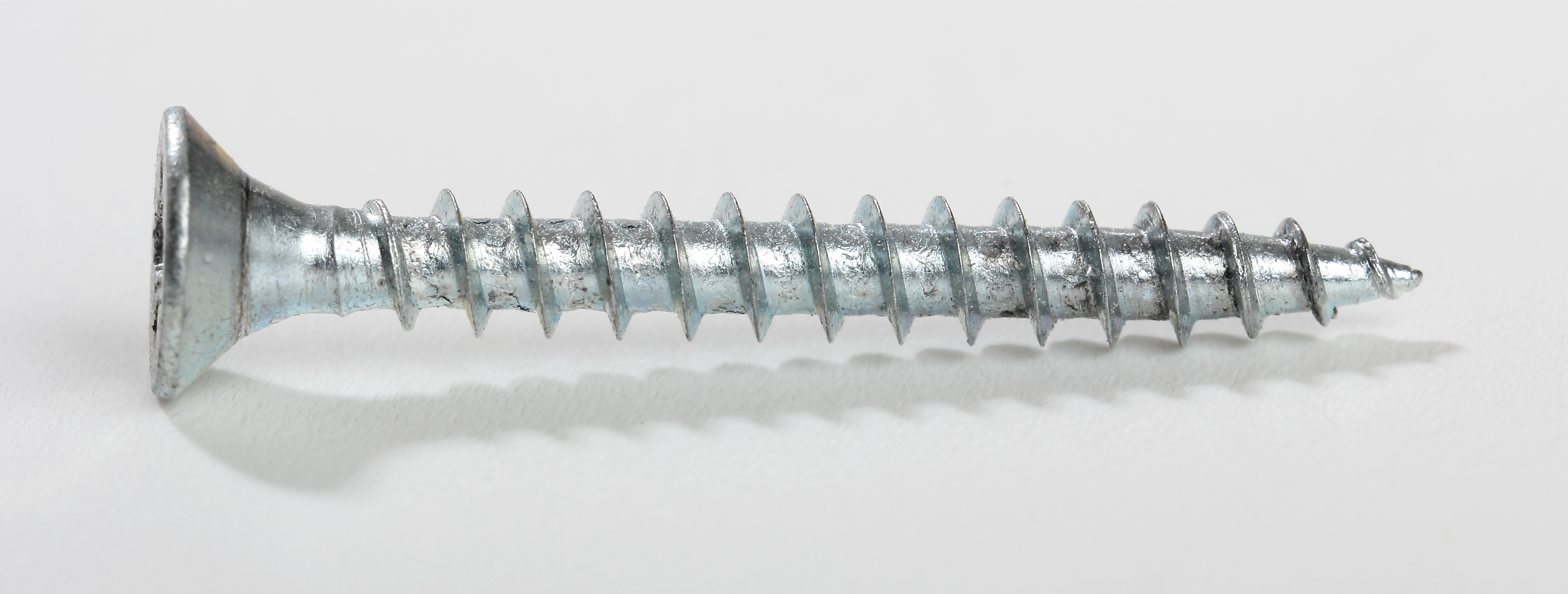
Wood screw with a pointed tip, deep threads and smooth upper shank

Wood screw

Look for: a sharp point, deep threads and sometimes a smooth upper shank.

Photo: Dmitry Makeev · CC BY 3.0
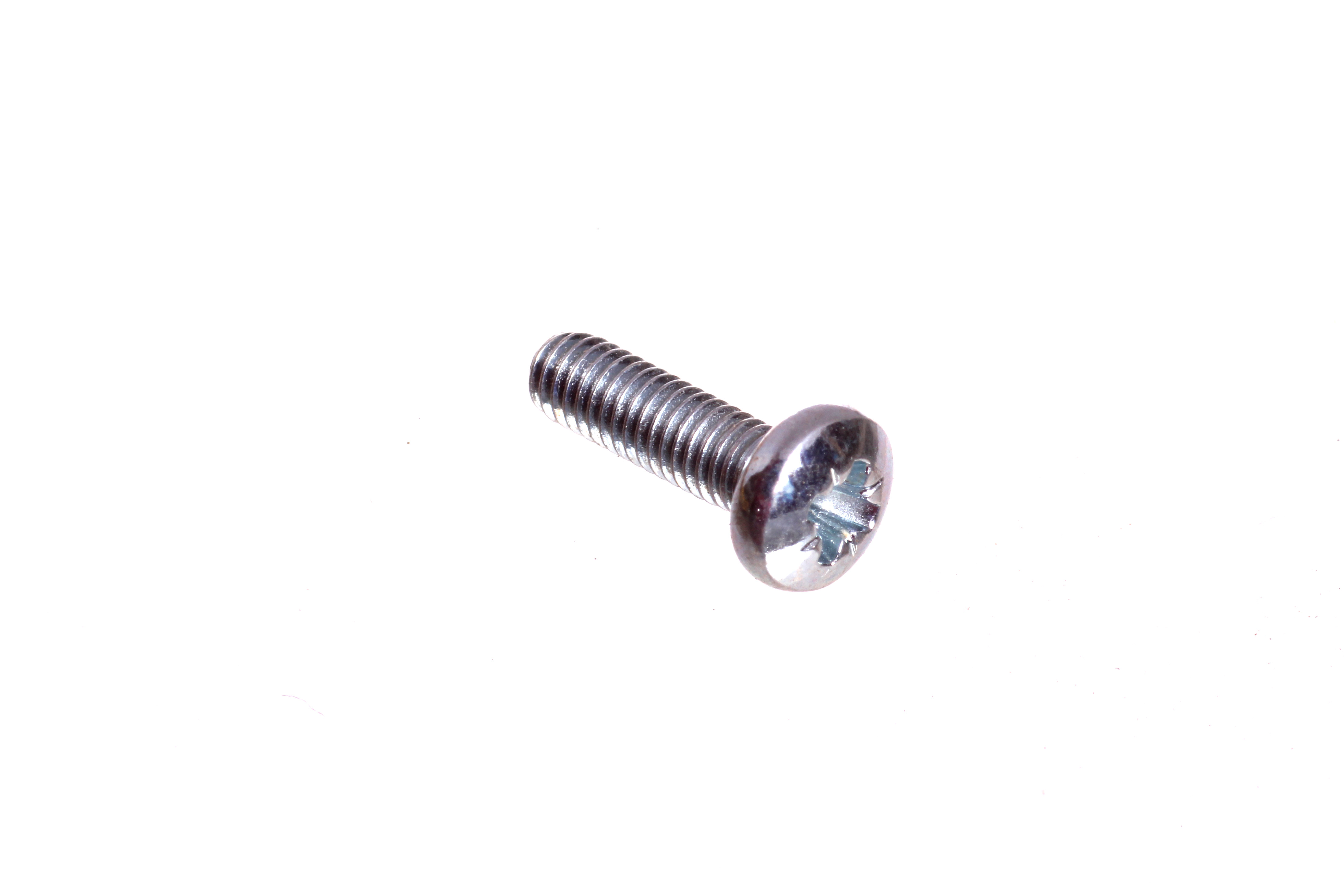
Cross-head machine screw with even threads and a blunt end

Machine screw

Look for: uniform threads and a blunt end. Match the thread to the nut or threaded hole.

Photo: oomlout · CC BY-SA 2.0
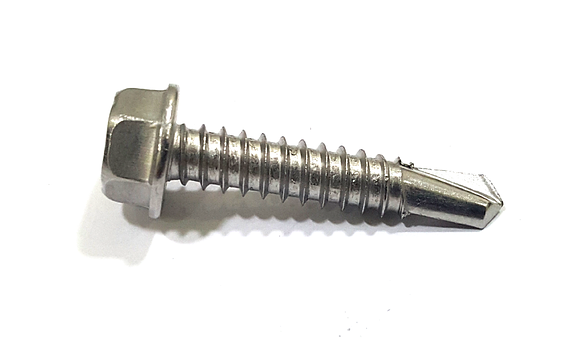
Hex-head self-drilling screw with a drill-bit shaped cutting tip

Self-drilling screw

Look for: a drill-shaped cutting tip. Check its intended material and drilling thickness.

Photo: Zheer16 / Pixabay · CC0

Tap a photo to enlarge it. Photos are shown without cropping. Sheet-metal and drywall screws can resemble other pointed screws; confirm the original specification.

LIKELY SCREW FAMILY

Start with the tip

Choose the features you can see. We’ll narrow down common screw types and explain what to check next.

Identify the drive recess

VISUAL REFERENCE

Screw types, heads & size diagrams

Tap any diagram to view the details.

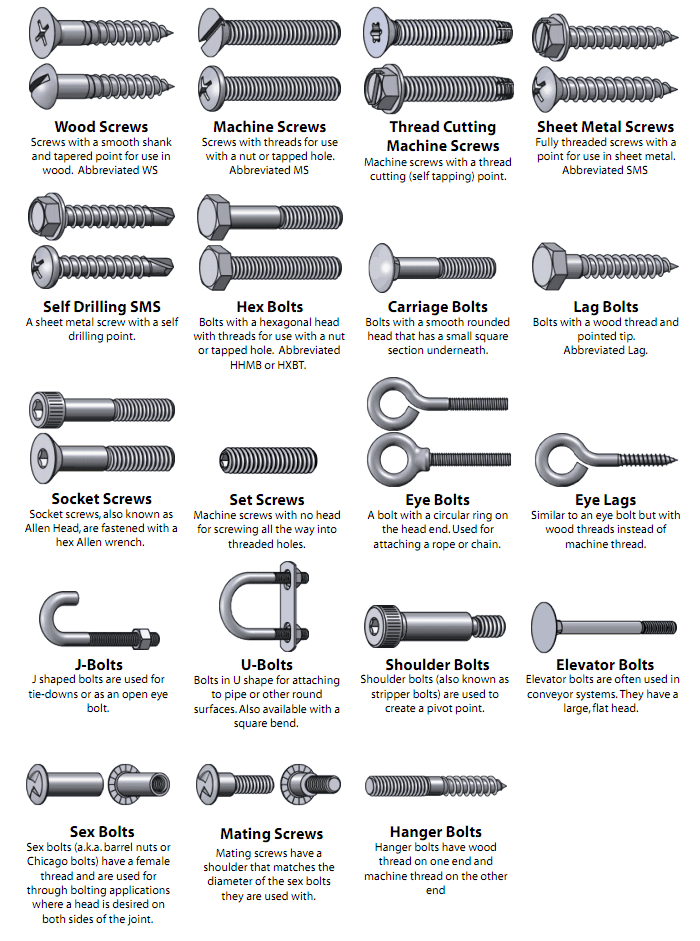
Screw and bolt types

Compare wood screws, machine screws, self-drilling screws, socket screws and common bolts.

Illustrated reference of nineteen screw and bolt familiesOpen full-size image ↗

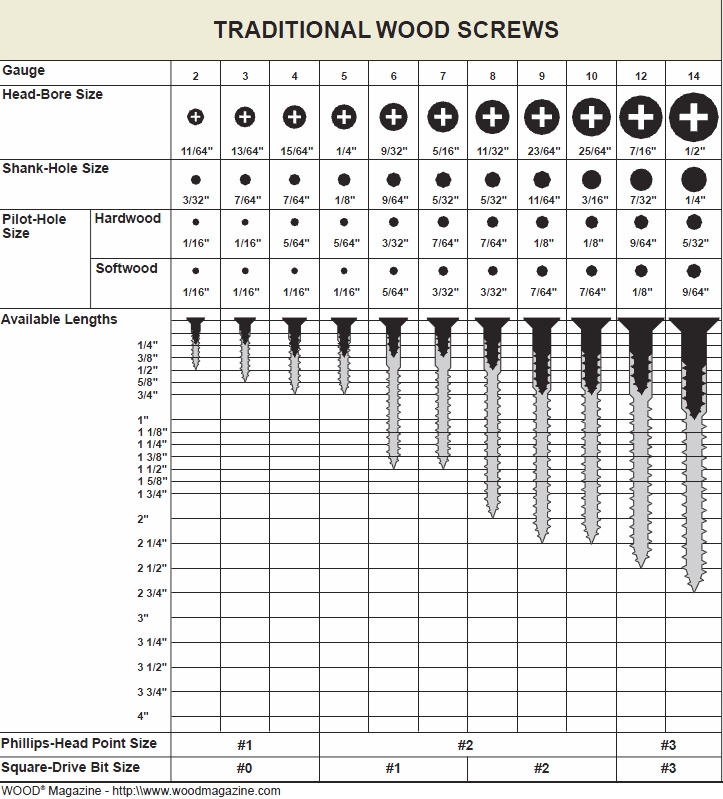
Traditional wood screw chart

US traditional wood-screw reference with head-bore, shank-hole and pilot-hole sizes.

WOOD Magazine traditional wood screw chart with gauges, hole sizes and lengthsOpen full-size image ↗

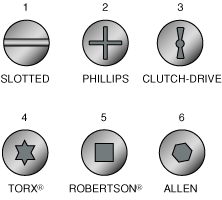
Screw drive types

Compare slotted, Phillips, clutch-drive, Torx, Robertson and Allen recesses.

Six screw drive recesses labelled slotted, Phillips, clutch-drive, Torx, Robertson and AllenOpen full-size image ↗

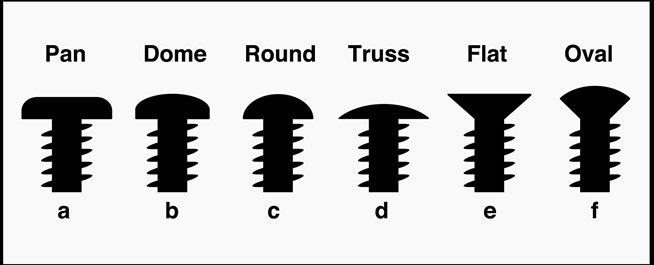
Screw head shapes

Compare pan, dome, round, truss, flat and oval heads from the side.

Side profiles of pan, dome, round, truss, flat and oval screw headsOpen full-size image ↗

Image source: The Indian DIY & Woodworker — Types of screws. Traditional wood-screw chart: WOOD Magazine (credit retained in the image). Illustrations are not life-size. The wood-screw chart applies to traditional screw designs; check manufacturer guidance for modern construction screws and pilot holes.

FREE PRINTABLE REFERENCE · 3 PAGES

Screw size chart PDF

Metric and US size charts, thread pitches, labelled screw photos and measuring instructions. Keep it handy when matching a replacement.

Reference guide only — not a life-size measuring template.
Download screw size chart PDF

KEEP IT HANDY

Screw size charts

Common metric machine screws. Pitch shown is the standard coarse pitch; fine pitches also exist.

US diameter and thread reference: Monster Bolts screw size chart ↗. Inch-to-mm conversions are dimensions, not equivalent thread standards.

FROM GUESSWORK TO A GOOD FIT

How to measure
screw size

Record the outside diameter, length and thread pitch before choosing a replacement. Follow these steps to take measurements and compare them with the reference charts.

01

Measure the outside diameter

To measure screw size, start with the widest part of the threaded shaft. Measure across opposite thread crests, not across the screw head or the narrow valley between threads. A caliper is the best practical choice for small differences. Our on-screen gauge lets you make an approximate comparison on a phone or desktop after calibration.

Match the calibration line to the short edge of a standard payment card, or to a known length on a ruler. Keep the same browser zoom and display settings while measuring. Recalibrate after changing devices, orientation or zoom. Move the gauge until both lines touch the outside edges of your screw.

02

Measure length from the seating point

For most pan, round, hex and socket-head screws, measure from the underside of the head to the tip. For a flat countersunk head, measure the full length including the head because the head sits inside the material. Raised countersunk and other specialty screws may use different conventions; check the manufacturer's drawing.

A diameter match does not make a screw a suitable replacement. A longer screw can bottom out in a blind hole, while a shorter one may not engage enough thread. Record the actual length separately instead of assuming it from a common size.

03

Check thread pitch

Metric thread pitch is the distance in millimeters from one crest to the next. US machine screws use threads per inch, or TPI. For example, M4 × 0.7 describes a nominal 4 mm diameter and a 0.7 mm pitch; #8-32 describes a numbered diameter with 32 threads per inch. Measure ten intervals across eleven crests and divide the distance by ten to estimate metric pitch. A thread-pitch gauge is more reliable.

Machine screws commonly have uniform threads and a blunt end for threaded holes or nuts. Wood screws often have a sharp tip, deep threads and sometimes an unthreaded shank. Sheet-metal screws may also have sharp points, so appearance can overlap. A drill-shaped tip suggests a self-drilling screw. Match the intended material and manufacturer specification as well as the appearance.

04

Use metric and US screw size charts

Use the charts to compare your measured diameter with nominal sizes. Metric sizes include M3, M4 and M6; US sizes use numbers or fractional inches. Read the diameter and thread columns together. Converting units does not make different thread standards interchangeable.

For example, a #8 screw measures about 4.17 mm across its nominal thread diameter, so it can look similar to M4. Their threads differ. Use our screw size finder to compare candidates, then verify the actual pitch before testing a replacement. Never force a screw that resists turning into an existing threaded hole.

To identify screw type, combine the point, shaft, head and drive recess. Phillips, slotted, hex socket and Torx-style describe the drive, not the material the screw is designed to fasten. Take these measurements and observations with you when buying replacement hardware.

When using a wood screw size chart, remember that head dimensions and thread designs vary across products. A machine screw chart cannot confirm a wood screw’s pilot hole requirement. Keep a written note of the diameter, measured length and visible features. For an unknown or worn fastener, bring the original screw to a hardware supplier so the thread and intended replacement can be checked alongside your measurement notes.

A FEW USEFUL ANSWERS

Screw sizing, explained

How do I measure screw size?

Record three things: outside thread diameter, screw length and thread pitch. Measure diameter across the widest thread crests. Measure length from the seating point to the tip, including the head for flat countersunk screws. Compare diameter with the metric or US chart, then check pitch and screw type before choosing a replacement.

Can I measure screw size online?

Yes. Calibrate this page against a card or ruler, then manually adjust the screen gauge to the screw’s outside edges. Our tool shows approximate diameter candidates as you adjust. You can also enter measurements from a caliper. The website cannot detect a screw simply placed on the screen.

Can I use this tool on my phone without installing an app?

Yes. Open Measure Screw in your phone, tablet or computer browser. Calibrate the screen before adjusting the gauge, or enter measurements from a caliper. The tool cannot sense objects placed on the screen. Confirm close matches with calipers and a thread gauge.

How do I measure screw threads?

For metric screws, measure the distance across ten thread intervals and divide by ten to estimate pitch in millimeters. For inch threads, count the thread intervals over one inch to find threads per inch, or TPI. A thread-pitch gauge is a better way to check small or closely spaced threads. Enter the pitch in the tool to compare it with the listed candidates.

How do I measure screw size in the UK?

Check the actual fastener rather than assuming its thread standard from your location. Measure diameter and length, then determine whether pitch is specified in millimeters or threads per inch. This tool compares common metric and US machine screw sizes; it does not include every British or specialist thread standard. Use the original specification or a supplier’s thread gauge for an uncertain match.

How do I measure screw size for a wall plug?

Measure the screw’s outside thread diameter and length, then check the wall plug manufacturer’s specified screw range. The drill diameter for the plug is a separate measurement. Suitability also depends on the wall material, plug design, fixture thickness and required embedment. The screw diameter estimate alone cannot determine a suitable plug or load rating.

Can I measure screw size from a photo?

A photo alone does not provide a reliable physical scale. A ruler beside the screw in the same plane can help estimate dimensions, but perspective and lens distortion can affect the result. This tool does not measure uploaded photos. Measure the physical screw with the calibrated gauge or calipers; use the example photos to compare visible screw types.

How do I measure screw size (metric)?

Record the outside thread diameter and length in millimeters, then measure pitch in millimeters per thread interval. For example, M4 × 0.7 means a nominal 4 mm diameter with a 0.7 mm pitch; length is recorded separately. Use the metric screw size chart to compare common sizes, and verify the pitch before replacing the screw.

Can I download a screw size chart PDF?

Yes. Download our free screw size chart PDF for metric and US screw diameters in mm and inches, common thread pitches, screw type photos and measuring instructions. The three-page guide is a reference chart, not a life-size measuring template. Confirm thread pitch, length and application before choosing a replacement.

How do I read a machine screw size chart?

A machine screw size chart lists nominal thread diameter and thread spacing. In the metric chart, M4 means a nominal 4 mm diameter, and its common coarse pitch is 0.7 mm. In the US chart, #8-32 means a #8 screw with 32 threads per inch. Screw length is a separate measurement. Use our metric and US screw size charts to compare readings, then confirm pitch and length before choosing a replacement.

How do I measure screw size in mm?

Measure the outside diameter across the thread crests with a caliper, or estimate it with our calibrated on-screen gauge. Record diameter and length separately in millimeters. For example, M6 indicates a nominal 6 mm thread diameter, not a 6 mm head or length. To convert a measured diameter or length from inches to mm, multiply by 25.4. The conversion does not make an inch thread compatible with a metric thread.

How do I find screw size in inches?

Measure the outside thread diameter and screw length in inches, then compare them with the US screw size chart. Smaller US machine screws use numbered sizes, such as #8 with a nominal diameter of 0.164 inches; larger sizes commonly use fractions, such as 1/4 inch. To convert millimeters to inches, divide by 25.4. Also confirm the threads per inch (TPI), because screws with the same diameter can have different thread spacing.

How does the screw size calculator work?

The screw size calculator compares your measured diameter with the nominal metric and US sizes in its reference tables and shows the closest candidates. Calibrate the screen before using the on-screen gauge, or choose Enter measurements to enter caliper readings in mm or inches. You can add thread pitch to compare common threads and select visible tip and shaft features to suggest a likely screw type. Results are estimates; the calculator does not automatically detect objects or guarantee a compatible replacement.

What size is a #8 screw?

A #8 machine screw has a nominal outside diameter of 0.164 inches, or 4.1656 mm. Common machine threads include #8-32 UNC and #8-36 UNF. It is close in diameter to M4, but the two are not interchangeable.

What are M4 and M6 screw sizes?

M4 and M6 indicate nominal thread diameters of 4 mm and 6 mm. Common coarse pitches are 0.7 mm for M4 and 1.0 mm for M6. Length is a separate measurement, and fine-pitch variants need a separate pitch check.

How do I measure screw size for a drill bit?

There is no single drill-bit answer based only on screw diameter. Wood pilot holes, clearance holes and threaded tap holes serve different purposes. Material, screw design and thread pitch affect the correct drill size. Use the screw manufacturer's pilot-hole table or a tap-drill chart for the exact thread.

What screw size fits a license plate?

License-plate screws vary by vehicle, bracket and market. Check the vehicle manual or measure an existing screw's diameter, pitch and length. Do not force a similar-looking metric or imperial screw into the fitting.

How do I measure screw size from a hole?

A hole measurement alone is not enough. A clearance hole is larger than the screw, while a threaded hole has a thread profile and pitch. Identify whether it is threaded, then use suitable gauges or the original part specification.

What screw types can I identify with this tool?

Compare visible tip and shaft features to narrow down common screw types, including machine screws, wood screws, self-drilling screws, and possible drywall or sheet-metal screws. These are suggestions, not a confirmed identification. Check the diameter, thread pitch, head profile and intended application before selecting a replacement.

Screw measurement guides

Detailed English-language guides to diameter, length, thread pitch and screw types.

Browse the guides (English) →

ONE QUICK SETUP

Calibrate your screen

Match the line below to your reference. Keep your browser at the same zoom afterward.

Fine adjustment

Use a standard card, not a resized image. No card details are collected.